Watch the full interview
Atakama at ASCII Edge San Antonio: AI Is Creating More Cybercriminals. Are MSPs Ready?
Table of Contents
Every channel event this year has an AI session. Fewer of them get specific about what AI actually changes for MSPs: more attackers, more tools to govern, and more pressure on the fundamentals that were already stretched thin.
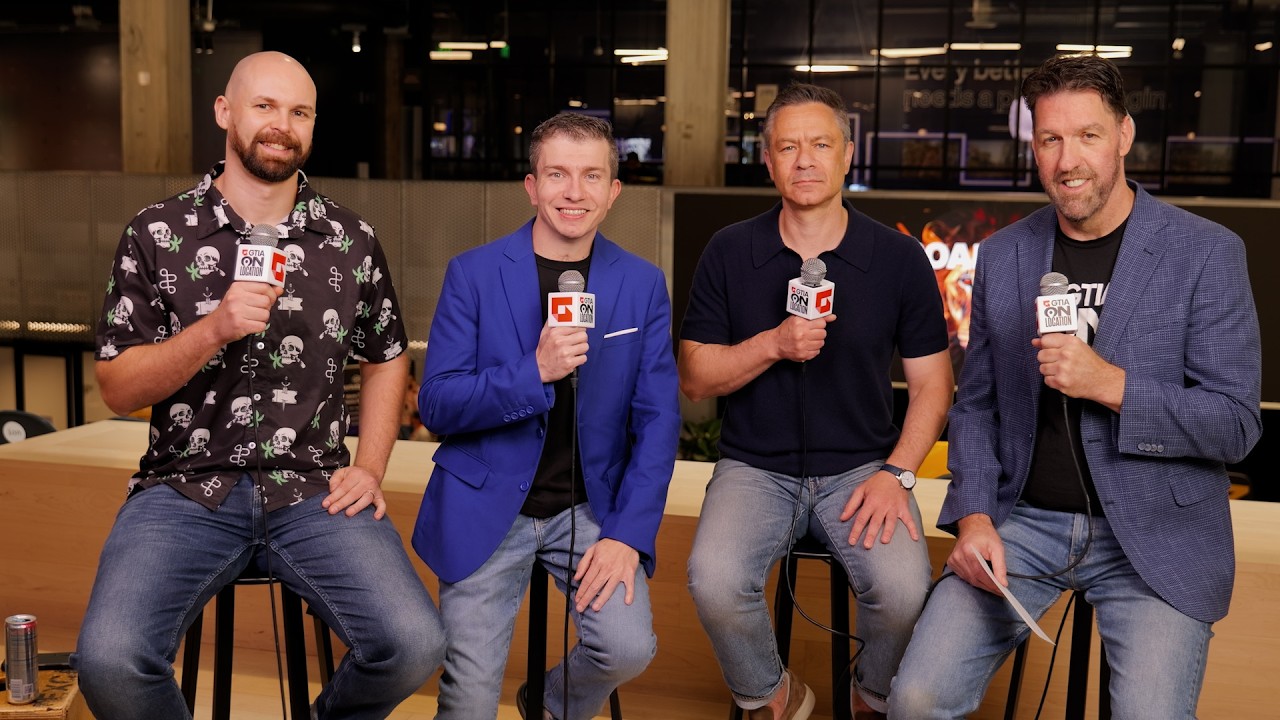
At ASCII Edge San Antonio, GTIA's Sharon Florentine sat down with Atakama's Kaila Mathis and Proofpoint's Andy Syrewicze, both representing ASCII Cup finalists, to cover exactly that. The conversation ran from browser risk and AI guardrails to why the basics still decide who gets breached, and what MSPs should be watching heading into 2027.
The browser is where the work, and the risk, lives
Florentine opened by asking what MSPs and their clients underestimate about securing today's work environment. Kaila's answer: how much of that environment is now a browser tab.
"There was the shift where everyone moved from on-prem to the cloud. Now when you talk about where your data lives, you're basically listing a list of SaaS vendors. Your sales software, your HR software, your legal, all of that exists in the browser."
Most MSP stacks were built around the endpoint, the network, and the firewall. Those layers still matter, but none of them see what happens inside a browser session, which is where clients now do most of their work.
"No matter how great your security is across your endpoint, your network, your firewalls, you need visibility and control over that browser layer."
Don't be the department of no
AI adoption is outrunning governance at most organizations. Asked how MSPs are balancing innovation with security, Kaila started with what nobody wants to become.
"The biggest thing is no one wants to be the department of no. AI is great for companies. It enables people to be more strategic, to work quickly, to do more with less. So the last thing that we want to do is discourage people from using AI."
The alternative to blocking isn't a free-for-all. It's specificity. Rather than switching off ChatGPT, Claude, or browser extensions outright, the MSPs Kaila talks to want granular policies:
"Maybe they can sign in, but they have to sign in with a work account, not a personal account. They shouldn't be able to copy and paste sensitive information into ChatGPT. They can't upload all of your client data in a spreadsheet and ask it to work through it."
That is the thinking behind how Atakama approaches AI governance. A blanket block will eventually get routed around by the end users, and the MSP loses visibility along with the client's goodwill. Allow, warn, and block rules at the browser keep the productivity gains while keeping sensitive data where it belongs.
AI has lowered the barrier to cybercrime
Florentine then asked Andy what security challenge MSPs are talking about now that wasn't on the radar a few years ago. His answer gave the interview its headline.
"AI has democratized the ability to become a threat actor, a cyber criminal. It used to be if I woke up in the morning and decided today's the day I'm going to be a cyber criminal, I would have to have some level of pre-existing knowledge. Well, that's not the case anymore."
Open-weight models without frontier-level guardrails make it easy to launch attacks at scale. Andy described a Black Hat demo where he used a local model to generate seven or eight highly targeted spear phishing messages in about 90 seconds.
His point for MSPs was measured. The threat isn't a wave of novel AI-driven attacks, at least not yet. It's more of the same attacks, more often, which puts the weight back on the best practices the industry has been preaching for years.
Simplicity is king
Atakama was named one of the top 10 vendors in this year's ASCII Cup. Asked what MSP partners have taught the team over the past year, Kaila kept it to one idea.
"The biggest thing that we have learned from MSPs is simplicity is king. MSPs are approached with a lot of tools. Their clients are approached with a lot of tools."
A capable product that is hard to deploy, hard to read, or hard to act on doesn't get adopted, however good the technology is. Kaila said that is why the team focuses on keeping the product simple and investing heavily in customer success, so it gets used the way it should across the whole organization.
Andy echoed the partner theme from his side, calling MSPs the most resilient part of the channel. Virtualization, the cloud, and now AI were each supposed to make them obsolete, and each time they adapted and kept delivering value.
Looking to 2027: ownership and the basics
The closing question was what MSPs should prepare for heading into 2027. Andy named agentic AI, which creates AI entities acting with many of the same capabilities as end users. Then he warned against the trap that comes with every new threat: chasing it while the front door stays open.
"They're so focused on agentic AI and securing it that those two customers over there, they don't have MFA enabled. That customer over there, their SharePoint permissions are wide open."
Kaila built on that point and framed the basics around one word: ownership. Teams are being told to roll out AI and agentic tooling at speed, often expected to do 10x more without new resources.
"The biggest thing that we now need to understand is ownership. Who owns each workflow? Who owns each tool? How can you see what people are doing on their own devices and how that connects into other systems that are running?"
It is a governance question before it is a technology question. But answering it depends on visibility into where AI tools are actually being used, because you can't secure AI without securing the browser.
Kaila's segments
Click a timestamp to jump the video to that moment.
See what your clients' browsers are doing
Atakama gives MSPs visibility and control inside the browser, from one multi-tenant console.
See the platformRelated Articles


Stay ahead of browser threats
Get monthly security insights, product updates, and expert guides delivered to your inbox.
No spam. Unsubscribe anytime.